
Archival black and white photograph showing the original Norfolk & Western railway tracks cutting through the rugged New River Valley

Archival view of the original Norfolk & Western railbed cutting through the New River Valley.

Living History

The Railroad That Built Fries

How the Norfolk & Western Railway, the Washington Mill, and the New River Trail Changed Southwest Virginia Forever.

Before the Railroad

In the late 1800s, the New River Valley was a rugged, isolated region of Southwest Virginia. Lined by steep, forested mountains and framed by the winding, rocky New River, the land was beautiful but incredibly difficult to traverse. Transportation relied on dirt roads, horse-drawn wagons, and slow river boats.

Everything changed when the Norfolk & Western (N&W) Railway began pushing its lines into the mountains to access rich veins of coal, timber, and iron. However, the sleepy bend in the river that would eventually become Fries was still just wilderness—until one man recognized its untamed potential.

Colonel Francis Henry Fries Had a Vision

Colonel Francis Henry Fries, a prominent industrialist from North Carolina, saw what others missed. Where most saw treacherous rapids, he saw raw, unharnessed power. In 1900, he purchased land along the river with an ambitious plan: to construct a massive textile mill powered entirely by the river's current.

To bring his vision to life, he needed three monumental projects completed simultaneously:

  • 1A hydroelectric dam to harness the river.
  • 2A sprawling cotton mill to process materials.
  • 3A railroad connection to transport the finished goods to the rest of the country.

By 1901, the town of Fries was officially chartered, and construction began in earnest. The landscape was forever altered as workers blasted rock, poured concrete, and laid heavy steel tracks.

Building the Railroad Into Fries

A massive textile mill in the mountains was useless without a way to ship goods. Colonel Fries negotiated with the Norfolk & Western Railway to build a 5.5-mile branch line from the main route at Fries Junction directly to the site of the new mill.

This branch line became the lifeblood of the town. For decades, the mournful whistle of the N&W steam engines echoed through the valley. Trains arrived daily, bringing raw bales of cotton and essential supplies to the isolated community, and departed laden with finished cloth destined for markets worldwide.

Historic wooden trestle bridge spanning the New River Valley constructed by the Norfolk & Western Railway
The iconic trestle bridge spanning the New River Valley, a testament to early 20th-century railroad engineering.
Historic brick architecture of the Washington Mill building in Fries Virginia
1903 - 1989

The Washington Mill

Opening its doors in 1903, the Washington Mill was an industrial marvel. Powered by the newly constructed dam, it employed thousands of workers over its lifespan. Fries was designed as a classic "company town" — the mill company owned the houses, the general store, the school, and even the theater.

Generations of families spent their lives working to the rhythmic clatter of looms and the hum of the hydroelectric turbines. The mill thrived through world wars and economic booms, remaining the beating heart of the community for over 80 years.

Why the Railroad Followed the River

If you visit the New River Trail today, you might wonder why it so closely hugs the shoreline. The answer lies in the engineering limitations of early 20th-century steam locomotives.

Heavy trains loaded with tons of cotton, coal, or timber could not climb steep mountain grades. By laying the tracks along the natural contours of the New River, engineers ensured the route remained relatively flat. Today, that precise engineering necessity is exactly what makes the New River Trail so incredibly accessible and enjoyable for cyclists, hikers, and families.

Preservation

From Railroad to State Park

By the late 20th century, the American textile industry faced steep decline. In 1989, the Washington Mill finally closed its doors. Concurrently, the Norfolk & Western Railway abandoned the increasingly unprofitable rail line along the river.

Instead of letting the corridor fall to ruin, visionary citizens and the Commonwealth of Virginia saw a new kind of potential. The abandoned rails were pulled up, the wooden ties removed, and the crushed stone bed was preserved. The entire 57-mile corridor was donated and transformed into the New River Trail State Park—one of the premier "rails-to-trails" projects in the United States.

Abandoned railroad tracks leading into a dense green forest, representing the rails-to-trails conversion of New River Trail

The Trail Today

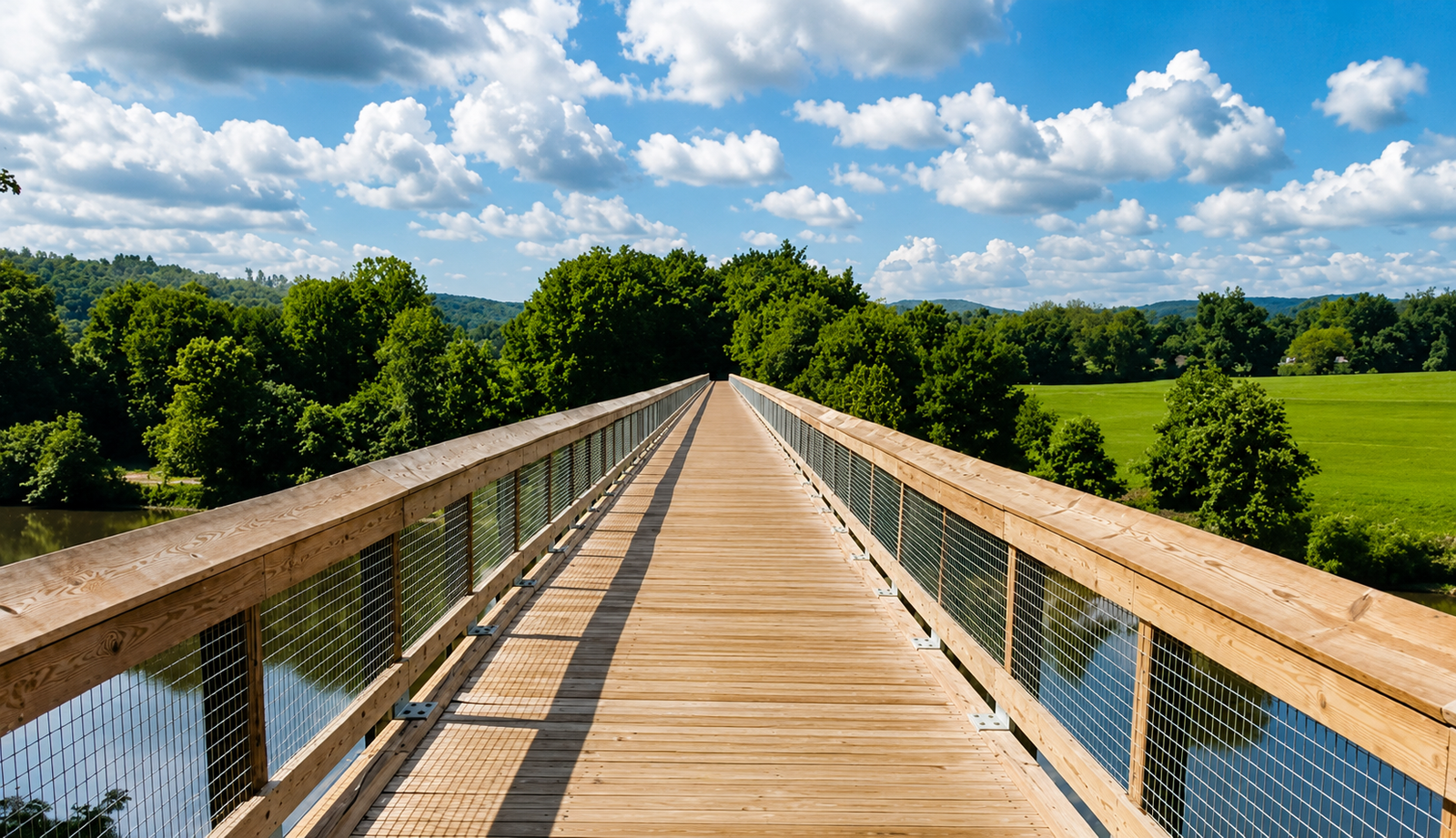
The New River Trail follows the former railroad corridor. The bridges were built to carry steam engines, and the tunnels were cut through rock for the rail line.

Historical Quick Facts

The town of Fries was officially founded in 1901 by Colonel Francis Henry Fries.

The Washington Mill began operations in 1903, becoming the heart of the community.

The massive mill was powered entirely by a custom-built hydroelectric dam on the New River.

A dedicated 5.5-mile branch of the Norfolk & Western Railway connected Fries to the main line.

The New River Trail follows the exact railroad bed that once hauled textiles and passengers.

The trail's gentle grade exists because steam locomotives couldn't climb steep inclines.

Visit Fries

Fries, Virginia sits at mile 0 of the trail, near the dam and the former mill site.

Wooden welcome sign to Fries, VA stating 'Where the Trail Begins' set against green trees